

SXSW is a paradox: part incubator, part billboard; a community stage and a corporate showroom all at once. It turned out to be the perfect backdrop for another big paradox we’re all wrestling with right now: artificial intelligence.
This year in Austin, I moderated “Wired for Change: How AI Is Supercharging Clean Energy,” a conversation that brought together a large‑scale renewable energy developer, a tax‑credit finance innovator, and a former Department of Energy chief of staff. It was peak SXSW: AI, energy, and policy colliding on a Sunday morning. AI isn’t just “coming for” the grid — it’s already rewriting the rules for how and where we build infrastructure, how we finance it, and how communities decide whether they want it in their backyard.
Here are five takeaways I brought home from Austin.
1. AI demand is now an energy strategy, not a footnote
No longer “just the cities.” Data centers and AI workloads are pushing huge new loads into rural regions with strong wind and solar resources, from New Mexico to the Plains. AI is acting like a giant magnet, pulling investment, jobs, and political attention into places that were nowhere near the old energy map — and already reshaping where the next wave of wind, solar, and long‑haul transmission gets built.
For brands and energy players, the translation is simple: courting AI or data‑center clients isn’t just a power decision — it’s a place decision, choosing which communities and states sit at the center of your long‑term story.
In the short term, it can feel like pure strain on the grid. But in many places, AI demand is finally forcing long‑overdue upgrades – new lines, substations, and smarter planning. The risk is defaulting to the quickest, dirtiest fixes instead of using this moment to lock in cleaner, more flexible infrastructure.
2. The most interesting AI use case is hiding in your deal room
When people hear “AI and clean energy,” their minds jump to smart grids or optimizing dispatch. All important. But one of the most compelling parts of our discussion focused on something less glamorous: paperwork.
Every large project stacks five to ten types of capital — development equity, construction debt, tax equity, tax‑credit sales, permanent capital — each with its own diligence teams and transaction costs that can eat a meaningful share of the budget.
That’s exactly where AI is already sneaking in. New platforms read enormous data rooms, map investor questions to the right documents, and draft responses based on prior deals — so developers aren’t re‑answering the same things from scratch every time. For a multi‑billion‑dollar project, shaving months off that process is the difference between catching a market window and watching it slam shut.
For brands in energy and infrastructure, there’s a bigger message: financial innovation is communications. If you’re using tools like transferable tax credits, green banks, or AI‑assisted diligence to move faster, that deserves to be part of your public story. It signals seriousness about scale, not just pilots.
3. Social license is now a design variable
Too often, hyperscale developers barnstorm into rural areas — buying land, negotiating generous tax abatements, erecting massive facilities — and then are surprised when locals bristle. Residents worry about higher bills, strained infrastructure, and whether these facilities will meaningfully support schools, fire departments, and local services over the long haul.
We also heard about a transmission project that did the opposite: funding an intervener process so communities could hire their own experts, building co‑benefits into the plan before any construction began. This yielded less opposition and more trust — because the relationship‑building came first. Social license isn’t a box you check after the deal closes; it’s something you design for from day one.
For brands, that means budgeting for community engagement the way you budget for engineering — aligning the financial model, the narrative, and the local benefits so your story makes sense to the people in the room, not just the people on your investor calls.
4. The quiet battlefield is in the market rules
Capacity markets — which determine who gets paid for being available when the grid is under stress — are a good example. Pattern Energy’s Allison Holly put it well: it’s like paying firefighters to sit in the station. You’re not paying them to put out fires every minute; you’re paying them to be ready when you really need them.
Today, those rules still favor conventional generation and undervalue what geographically diverse renewables, storage, and transmission can do to keep the lights on. We have the meteorological data and grid history to prove it — but if the rules don’t recognize that contribution, good projects stay stuck in the missing middle.
Updating those rules is not a technical exercise alone; it’s a political and narrative fight about what “reliability” means in a grid reshaped by AI‑driven demand. Brands that want a say in that fight need to lean in — on interconnection reform, capacity accreditation, and how tools like the Inflation Reduction Act get implemented — and explain their position in a way regulators, investors, and community leaders can all follow.
5. AI can be a leverage – or an excuse
We wrapped with a lightning round: in five years, will AI be a net accelerator or a drag on the clean‑energy transition? The answers were hopeful, but with caveats. AI can unlock new financing models, justify big bets on transmission and storage, and force long‑overdue grid upgrades. It can also drive up emissions and cement bad planning if we let it.
From the moderator’s chair, the throughline was clear: AI is leverage — it magnifies whatever system it enters. If your incentives reward short‑term thinking, AI will help you do more of that, faster. If your policies and community relationships are aligned with long‑term decarbonization, AI can help you get there sooner.
For brands, that’s the real SXSW question: will you treat AI and clean energy as two separate talking points, or as one story about your infrastructure, your values, and your license to operate?
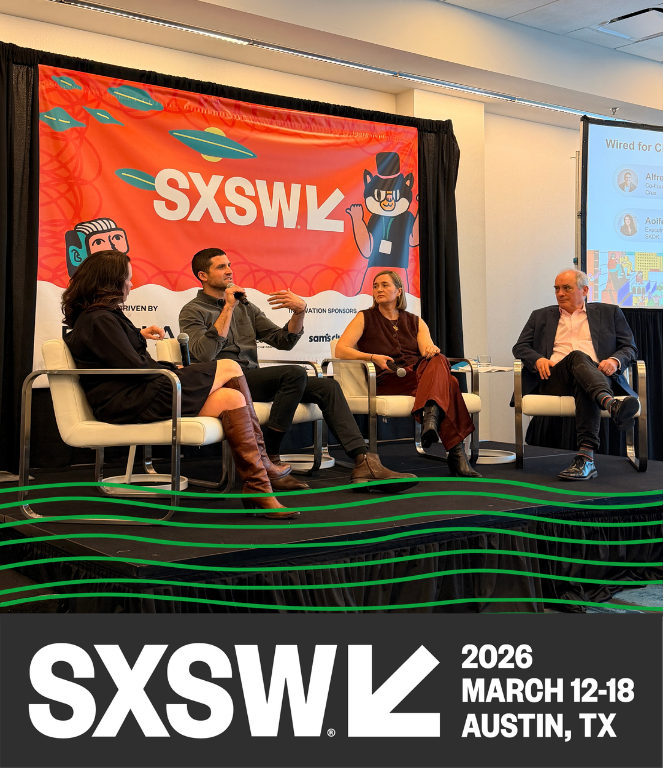
At SKDK, we bring a campaign mindset to that question. Moderating this panel was a reminder that the most valuable role in the room is often the one in the middle: the person who can listen to developers, financiers, policymakers, and communities, and then turn their competing truths into a path forward.
Aoife McCarthy is an Executive Vice President and leads the Energy and Clean Technology practice at SKDK.